Founder — The Foundation Method
Brenton Harriss
Strength and conditioning coach with a decade in combat sports. I build online coaching for people who train around a real life — not an ideal one.
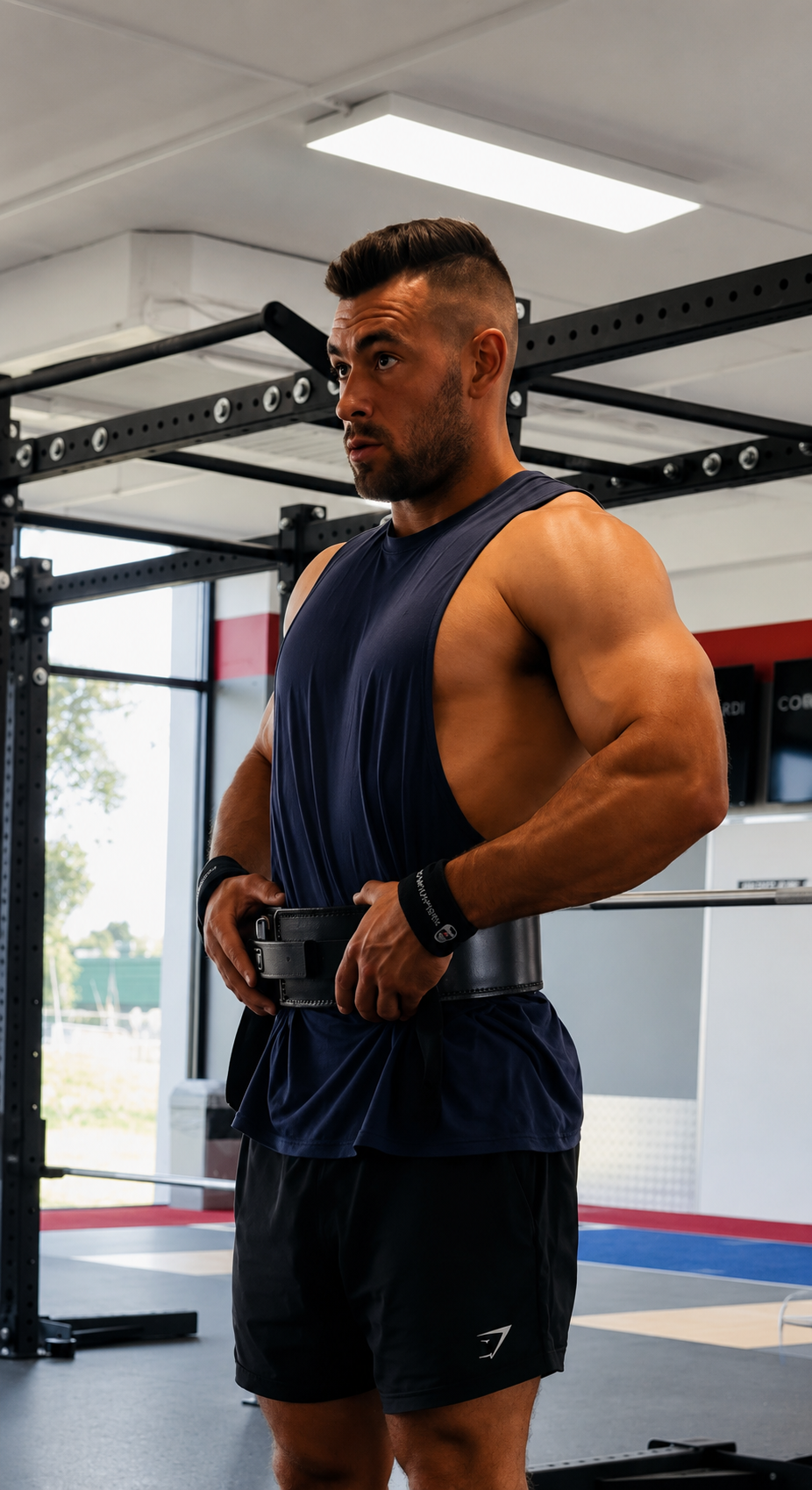
I run The Foundation Method — online coaching, built around real life.
I work on civil construction sites. Early starts, long days, and a roster that rarely does what you'd like it to. Civil work is mostly foundations — groundwork, earthworks, the layers that go in before anything visible gets built. Given what I ended up calling the business, that's either fitting or unimaginative depending on how you look at it.
Construction is still my full-time work. The coaching happens around it, which is a fair part of why I build training the way I do.
Ten years of my life have gone into combat sports — boxing, Muay Thai, kickboxing, MMA and Brazilian jiu-jitsu. Lately I've pointed my own training somewhere very different: I'm preparing for a 100km ultramarathon in support of Crohn's & Colitis Australia. Combat sports athletes aren't built for 100km, which is part of why I'm doing it.
The other part is that I live with Crohn's disease myself. It's a chronic inflammatory bowel condition — fatigue, unpredictable flares, and a complicated relationship with food that no generic meal plan has ever accounted for. Sometimes training feels excellent. Other times, getting through an ordinary day takes everything I've got. Learning to train around a body that doesn't always cooperate has shaped how I coach more than any course I've done.
The Foundation Method is what I'm building towards. Coaching full-time and opening a facility is the goal. For now it's being built the same way I'd ask any client to build something — around a full-time job, one layer at a time, with no shortcut available.
I won't ask you to do anything I'm not doing myself. I'm also not pretending I've got it all worked out. I'm still a beginner at plenty of things, and I reckon that's useful in a coach — it keeps you honest about how hard starting something actually is.
01
My Approach
Most of this industry sells shortcuts. Six-week transformations. Programs that promise the result without the process, then quietly rely on you blaming yourself when it doesn't hold.
I've watched a lot of people cycle through that, and they're not lazy — most are the hardest-working people I know. They've just never been taught how any of it works. Nobody explained why their program is built the way it is, what progressive overload means for them specifically, why a deload isn't failure, or what to do when life goes sideways for a fortnight.
So they follow the instructions until the instructions stop working, and then they stop.
02
Plans that bend instead of breaking
When your body doesn't reliably cooperate — and mine doesn't — you work out quickly that motivation is useless as a strategy.
What matters is whether the plan still works on a bad week. Whether it has room to bend without falling apart. Whether recovery is built in from the start rather than bolted on once you're already broken.
Most people don't have Crohn's. But nearly everyone has something: a job that swallows their evenings, kids, an old injury, shift work, stress, a body that's changed. The principle doesn't change. A plan that only works when conditions are perfect isn't a plan. It's a wish.
I've never had ideal conditions, which is exactly why I won't hand you a program that needs them.
03
You should understand your own training
The goal isn't for you to need me indefinitely. It's to teach you enough that you understand what you're doing and why — so when your circumstances change, you can adjust instead of stopping.
That means explaining the reasoning, not just handing over sets and reps. Coaching should leave you more capable and better informed than it found you.
The three
Move.
Restore.
Reflect.
Train properly. Recover properly. Think honestly about what's actually working.
Everything I program comes back to those three. Progress isn't complicated — it's consistency, executed well, sustained long enough to compound. The hard part is building something you can stay with, and that's the part I'm here for.